
Light pollution across Central and Eastern Europe has grown steadily over the past two decades, but Romania retains some of the darkest accessible skies in the region. This is partly a consequence of geography — the Carpathian arc creates a natural barrier between the urbanised lowlands and the high mountain valleys — and partly a result of relatively lower road density through forested zones compared to Western Europe.
The Bortle scale runs from 1 (the darkest skies on Earth, now essentially inaccessible) to 9 (inner-city sky with only the brightest stars visible). The sites described below range from Class 2 to Class 4, all reachable within a few hours of Romania's major cities.
How to read the Bortle scale in practice
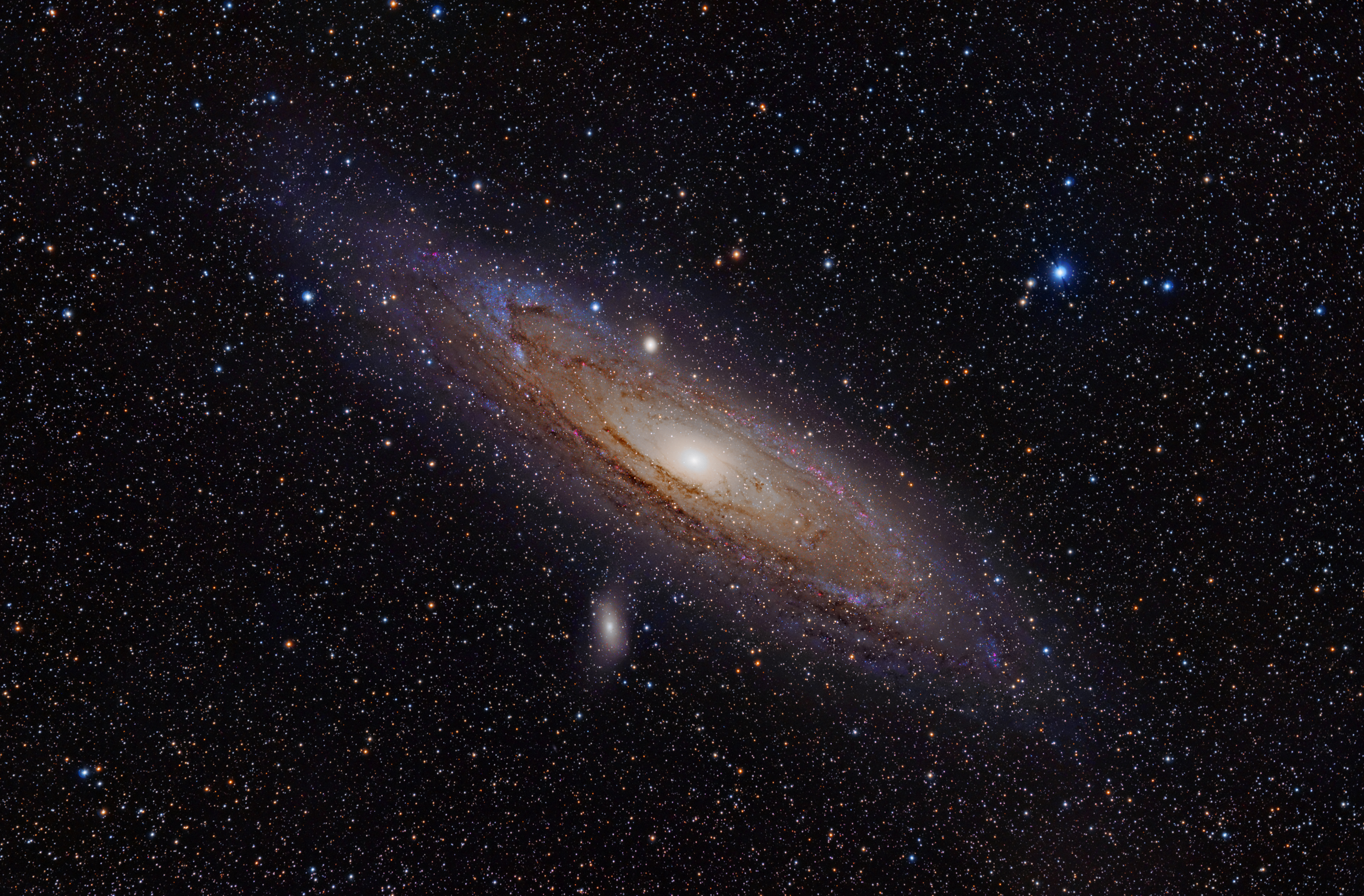
Bortle Class 3 means the Milky Way is prominent, the Gegenschein (a faint glow caused by sunlight reflecting off interplanetary dust) is visible under good conditions, and the limiting magnitude with the naked eye reaches around 6.6. That's sufficient to see M31 as a clear extended object spanning several degrees, resolve the Milky Way's dust lanes, and count well over 100 stars in the Pleiades without optical aid.
Class 4 is roughly what observers find 30–50 km from a city of 100,000 or more. The Milky Way remains clearly visible but the zodiacal band requires careful dark adaptation to trace fully. For telescope work, Class 4 is entirely acceptable for deep-sky observation.
Retezat National Park — Bortle Class 2–3
Retezat is the most consistently cited dark sky destination in Romania among organised astronomy groups. The park covers roughly 380 km² of the Southern Carpathians and has very few permanent settlements inside its boundaries. Road access from Petroșani takes approximately 40 minutes to the main entrance at Câmpu lui Neag.
The best observing areas are the plateau zones above 1,600 m, reachable on foot or by 4WD tracks with permission. At those elevations, horizon obstructions are minimal in most directions, and the sqm (sky quality meter) readings reported by visitors typically range from 21.5 to 22.0 mag/arcsec², confirming Bortle 2–3 conditions. The Milky Way casts a faint shadow on white surfaces at the darkest sites.
Key considerations: the plateau areas are inside a protected zone requiring a park entry permit (available at the entrance points). Camping is allowed at designated zones. Weather is highly variable — the area records some of the highest lightning strike frequencies in Romania during summer, so July–August sessions require real-time meteorological monitoring. Late September through early November offers the best combination of stable weather, long nights, and clear air after summer convection subsides.
Apuseni Natural Park — Bortle Class 3–4
The Apuseni mountains in western Romania offer accessible dark skies within 2–3 hours of Cluj-Napoca, Oradea, and even parts of Hungary. The karst plateau zones — the Padiș plateau in particular — have minimal artificial light in a 20 km radius and broad open horizons at altitude.
Padiș is reachable by car from Huedin (approximately 45 km on a mountain road, last 15 km unpaved). The area is popular with hikers and cavers, and there are several cabins offering accommodation, which makes multi-night observing trips logistically straightforward. The sqm readings from Padiș typically run 21.0–21.5, placing it firmly at Bortle 3–4.
Notable: Apuseni's latitude (approximately 46.6°N) gives it better southern horizon coverage than the higher-latitude mountain areas of northern Romania, making southern Milky Way objects more accessible during summer.
Bucegi Natural Park — Bortle Class 3–4
Bucegi sits directly above the Prahova Valley resort corridor (Sinaia, Bușteni, Azuga), which adds some light on the southern horizon. However, the plateau itself — accessible via cable cars that stop running before midnight — is dark enough for serious observation. The cable cars at Bușteni and Sinaia stop operating in the early evening, so observers planning long sessions need to ascend in the afternoon and either camp or descend on foot.
The advantage of Bucegi is infrastructure density for a mountain site: several staffed cabins exist on the plateau, and in clear-weather windows the drive from Bucharest takes 90–120 minutes to the cable car station. For Bucharest-based observers this is the most accessible sub-Bortle-4 sky within practical reach.
Danube Delta — Bortle Class 3 (wetland horizon)
The Danube Delta presents a unique observing context: extremely flat horizons in all directions, low humidity in late autumn, and negligible local light pollution away from the larger settlements like Tulcea and Sulina. The nearest significant urban light dome is Brăila, roughly 80 km west, which affects the western horizon only.
The flatness creates unusual conditions for rising and setting objects — planets and bright stars tracked near the horizon encounter almost no terrain obstruction. The primary limitation is humidity: from late October through March, ground fog and dew form rapidly after midnight, requiring aggressive dew heaters on any refracting or reflective optics. Boat access to truly isolated Delta areas typically requires hiring a local guide — the canal network is extensive and navigation in the dark presents real hazards.
Rarău–Giumalău area (Northern Carpathians) — Bortle Class 3
Less frequently mentioned in Romanian astronomy discussions, the Rarău-Giumalău range in Bucovina offers consistently dark skies and relatively stable autumn weather. The main observation site used by the local astronomical circle in Câmpulung Moldovenesc is on the Rarău plateau (1,651 m), reachable by an asphalted road in summer and early autumn. Sqm readings from this site average around 21.2–21.6.
The area is culturally interesting independently — the Bucovina painted monasteries are within 50–80 km, making this destination viable for multi-day trips combining astronomy with heritage tourism.
Planning a session: practical factors
Moon phase
A full moon near zenith raises the sky brightness by roughly 3–4 Bortle classes. At any of the sites above, scheduling around new moon ± 5 days makes a measurable difference in faint-object visibility. The window around new moon is particularly valuable for Milky Way core visibility between May and October (when the galactic centre is above the horizon at night from Romanian latitudes).
Transparency versus seeing
Transparency refers to atmospheric clarity — how much light is absorbed or scattered by water vapour and particulates. Seeing refers to atmospheric stability — how much turbulence distorts fine planetary detail. These conditions vary independently. High-altitude mountain sites in Romania tend to have good transparency but moderate seeing. Delta and lowland sites can have excellent seeing but suffer from humidity affecting transparency.
For deep-sky observation (galaxies, nebulae, clusters), transparency matters more. For planetary detail, seeing matters more. Apps like Astrospheric and Meteoblue provide both forecasts.
Resources for location verification
The Light Pollution Map using VIIRS SQM data provides current-year readings for any location. The Clear Outside app gives detailed hourly forecasts specifically structured for astronomical use.

